Digital asset treasury management for modern institutions
Store, move, convert, and manage digital assets with military-grade MPC security and granular controls. Automate workflows and connect seamlessly with on/off-ramps, exchanges, and DeFi.
Monthly Volume
Institutional Clients
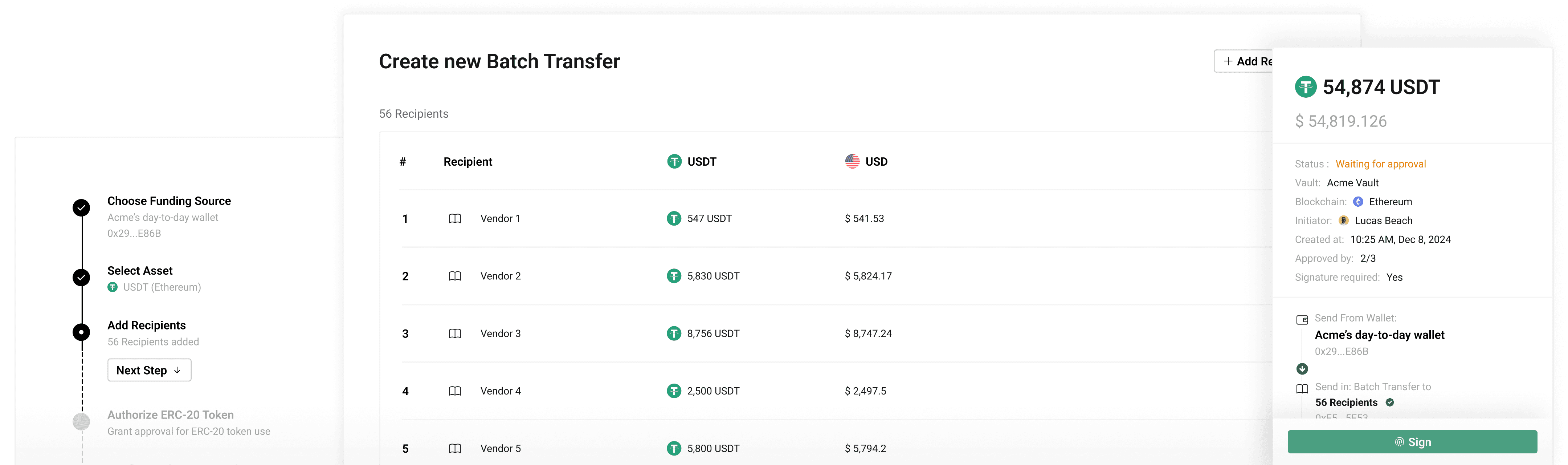


Built to govern treasury end-to-end across every wallet, chain, and workflow
Connect to the Entire Digital Asset Ecosystem
100+
blockchains
30+
integration partners
Seamless Connectivity
to exchanges, yield, and staking
Expand Your Network With Utila Link
Discover
by region, chain, asset or vertical
Connect
to global payment rails
Settle
securely and at scale

Comprehensive infrastructure stack for all digital asset operations
Why leading institutions are moving to Utila

Why do institutions choose self-custody infrastructure for digital asset treasury?

Self-custody gives your treasury team direct control over private keys. Utila's MPC model splits key shares between your organization and the platform, so no single party can move funds unilaterally, and no third party holds or controls your assets. That reduces counterparty risk, keeps your treasury running regardless of provider uptime, and avoids locking you into a single vendor's liquidity or compliance stack.
How does Utila's MPC key management protect treasury assets?
Utila's MPC protocol splits each private key into shares distributed between your organization and Utila, with both shares remaining private at all times. Every key share is bound to a specific user and device, so it cannot be extracted or reused elsewhere. The infrastructure is SOC 2 Type II certified and independently audited by Halborn, with no single point of failure in the signing process.
How do treasury governance policies work in Utila?
Utila's governance engine lets you define user roles, transaction limits, and multi-step approval workflows that are automatically enforced across all treasury operations. You can set different policies per vault, wallet group, or asset type. Approval quorums require a defined number of authorized signers before any transaction executes, and every policy change is logged for audit purposes.
Can I manage stablecoins and digital assets across multiple blockchains from one platform?
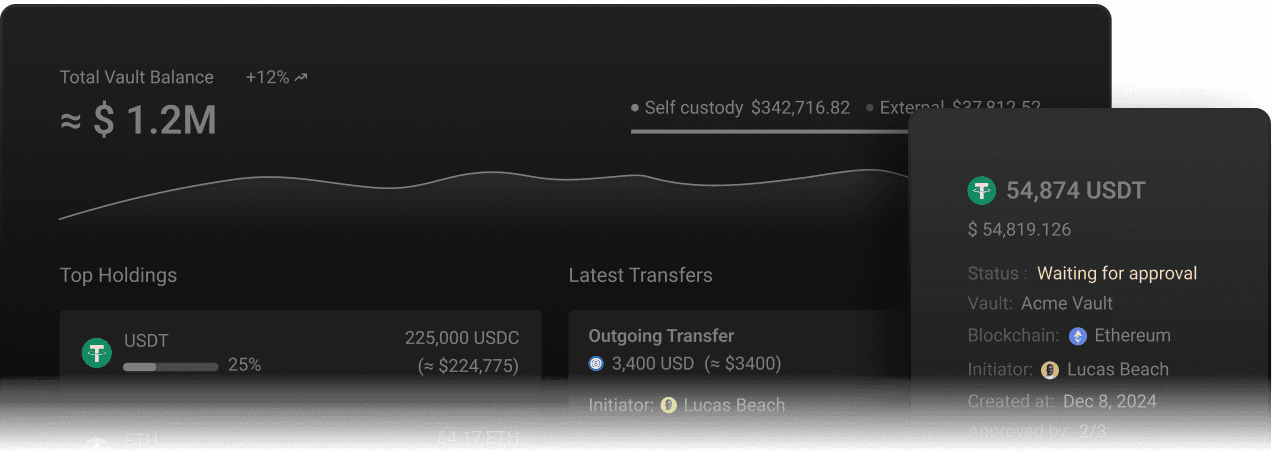
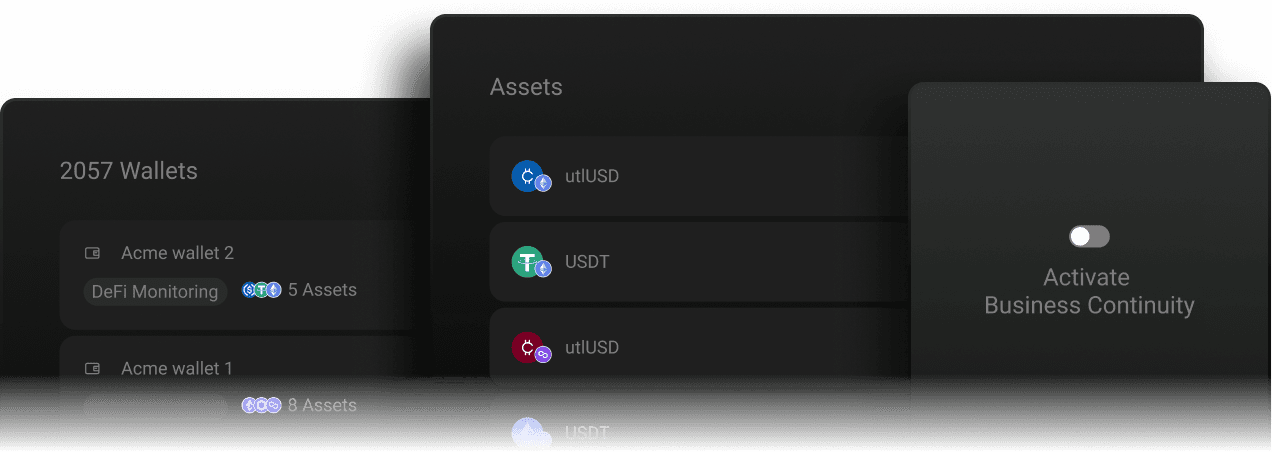
Utila supports 100+ blockchains from a single dashboard, giving your treasury a unified view of balances, transactions, and positions across every chain. You can add any EVM-compatible chain on demand through BYO EVM (Bring Your Own EVM) without waiting for platform-side integration. All wallets, policies, and reporting consolidate into one interface regardless of the underlying chain.
What treasury workflows can I automate with Utila?
Utila automates sweeping to consolidate funds from deposit wallets into your central treasury on a set schedule. Batch transfers process multiple payments in a single transaction, cutting gas costs. The API and webhooks let you trigger transfers, approvals, and balance checks programmatically, and the Utila Cosigner adds automated co-signing based on rules you define in your governance policies.
What compliance and AML screening does Utila include for treasury transactions?
Utila screens every treasury transaction with real-time AML/KYT analysis and enforces travel rule requirements automatically across jurisdictions. Screening integrates with Chainalysis, Elliptic, and TRM Labs directly within your transaction workflow, and every transaction, approval, and policy change generates an auditable log for regulatory reporting. The platform is SOC 2 Type II certified, with independent security audits by Halborn.
How do stablecoin treasury operations work on Utila?
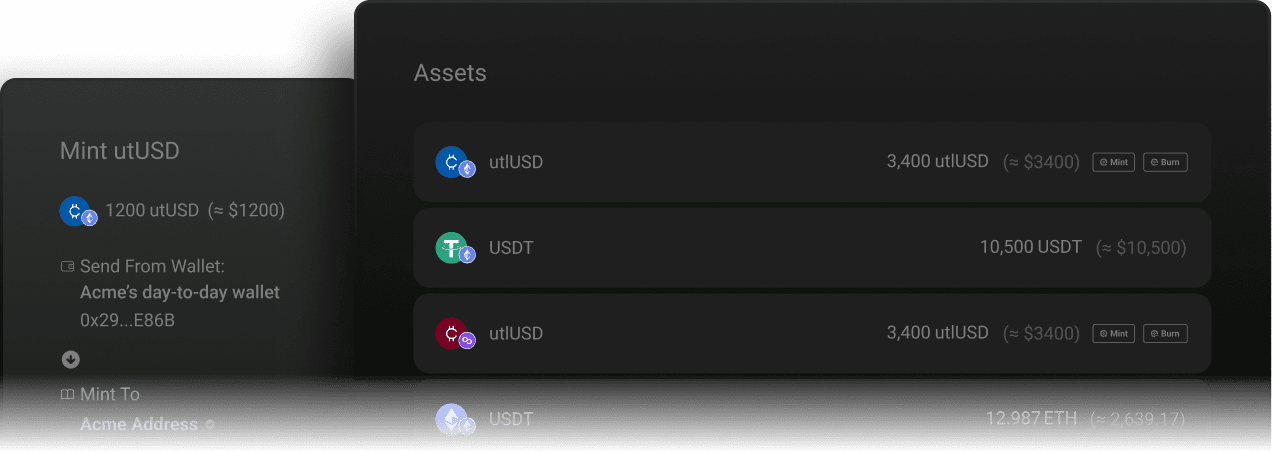
Utila runs stablecoin pay-ins, payouts, and cross-border settlement directly on stablecoin rails. You can receive stablecoins into dedicated deposit addresses, consolidate them via automated sweeping, and execute payouts in batch. Native on/off-ramp integrations let you convert between fiat and stablecoins within the platform. All stablecoin operations inherit the same governance policies, approval workflows, and compliance screening applied to your broader treasury.
Can Utila connect to exchanges, DeFi protocols, and fiat on/off ramps?
Utila connects to exchanges, DeFi protocols, and fiat on/off-ramps through 30+ built-in integrations. You can swap, bridge, stake, and access DeFi positions directly from your vault without switching between external tools. On/off-ramp integrations handle fiat-to-stablecoin and stablecoin-to-fiat conversion within the same workflow. All connected operations go through your governance policies and compliance screening before execution.
How do I integrate Utila's treasury management into existing systems?
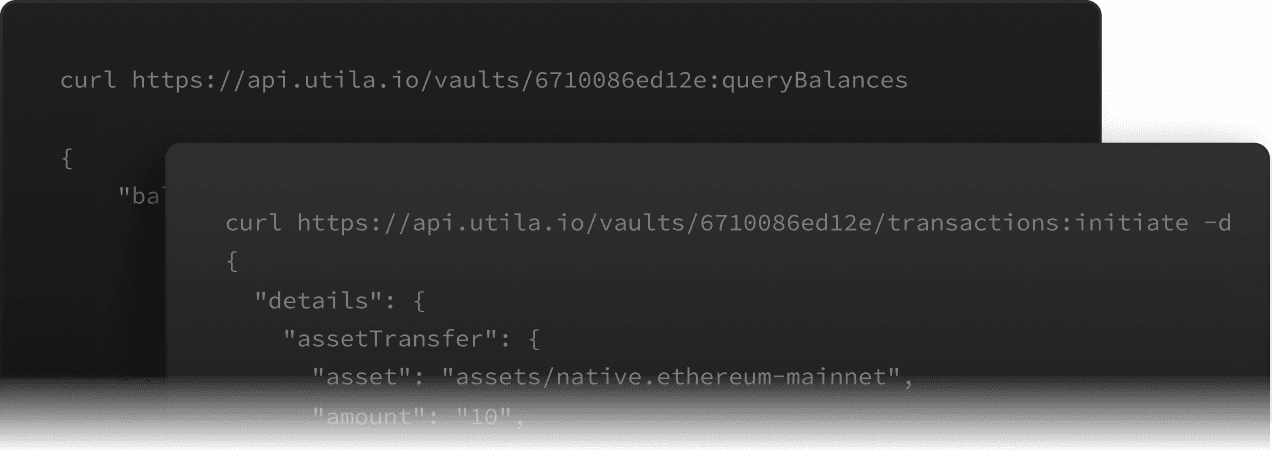
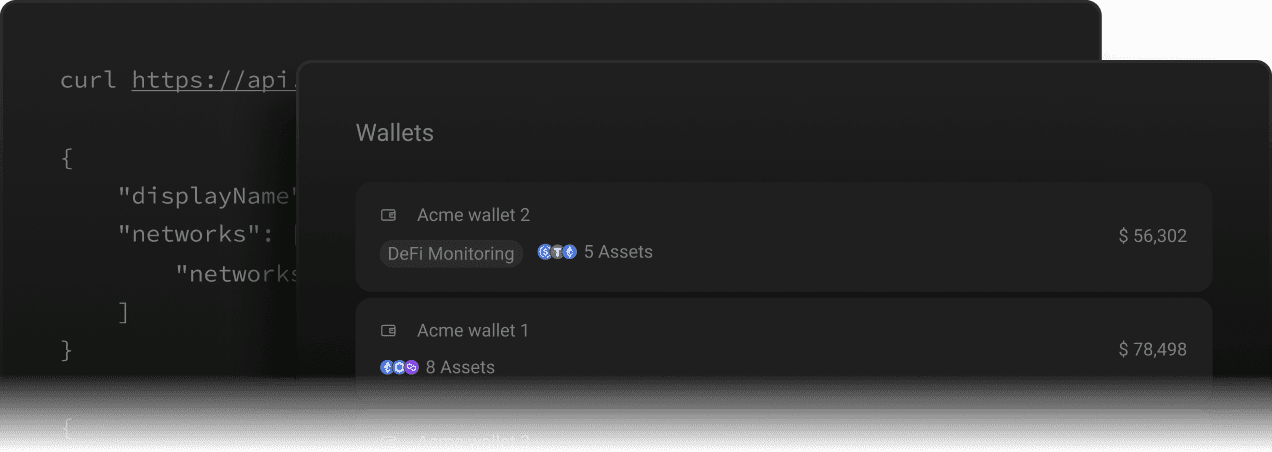
Utila exposes REST APIs and webhooks for integrating treasury operations into your existing tech stack. You can automate wallet creation, initiate transfers, query balances, and subscribe to transaction events programmatically. Service accounts handle machine-to-machine authentication for backend systems, and the developer documentation includes client libraries with example implementations to speed up onboarding.
What is Utila Link, and how does it support treasury connectivity?
Utila Link is a counterparty discovery and connectivity marketplace built into the platform. Treasury teams use it to find and connect with exchanges, OTC desks, liquidity providers, yield venues, payment partners, and on/off-ramps. You can filter counterparties by region, chain, asset, or vertical, then settle directly through Utila's infrastructure. Link reduces the time spent sourcing and onboarding new counterparties outside the platform.
Ready to modernize your treasury operations?
Companies who trust our enterprise-grade governance, security, and operational control:
Seamlessly connect your existing systems, infrastructure, and workflows — all in one unified platform.