Digital asset infrastructure for modern banks
Launch and scale secure, compliant digital asset services for your clients, from custody and payments to tokenized deposits and stablecoin operations, on a single bank-grade infrastructure layer.


Everything Banks Need to Build on Digital Assets
Scale from pilot to production without re-architecting.



How do tokenized deposits differ from stablecoins for a bank?

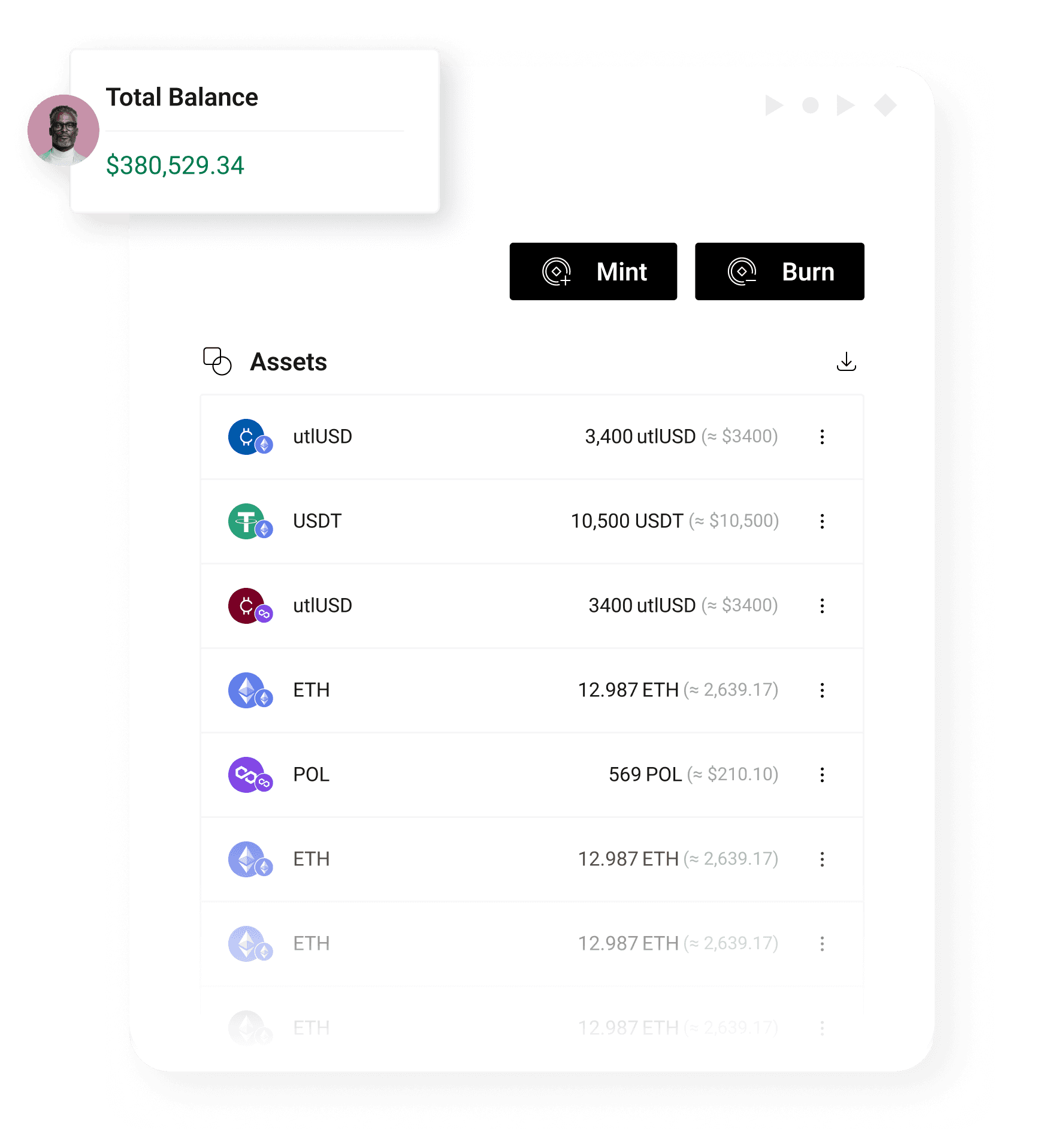
Tokenized deposits are on-chain representations of bank deposit liabilities, while stablecoins are issuer-backed tokens that circulate independently of a specific bank. On Utila, your bank controls minting, burning, distribution, and lifecycle governance for both tokenized deposits and stablecoins from one infrastructure layer, with bank-grade policy controls and full audit trails. This lets you issue deposit tokens under your own balance sheet while keeping the same operational rigor across every instrument.
Can our bank offer digital asset custody to its own clients using Utila?
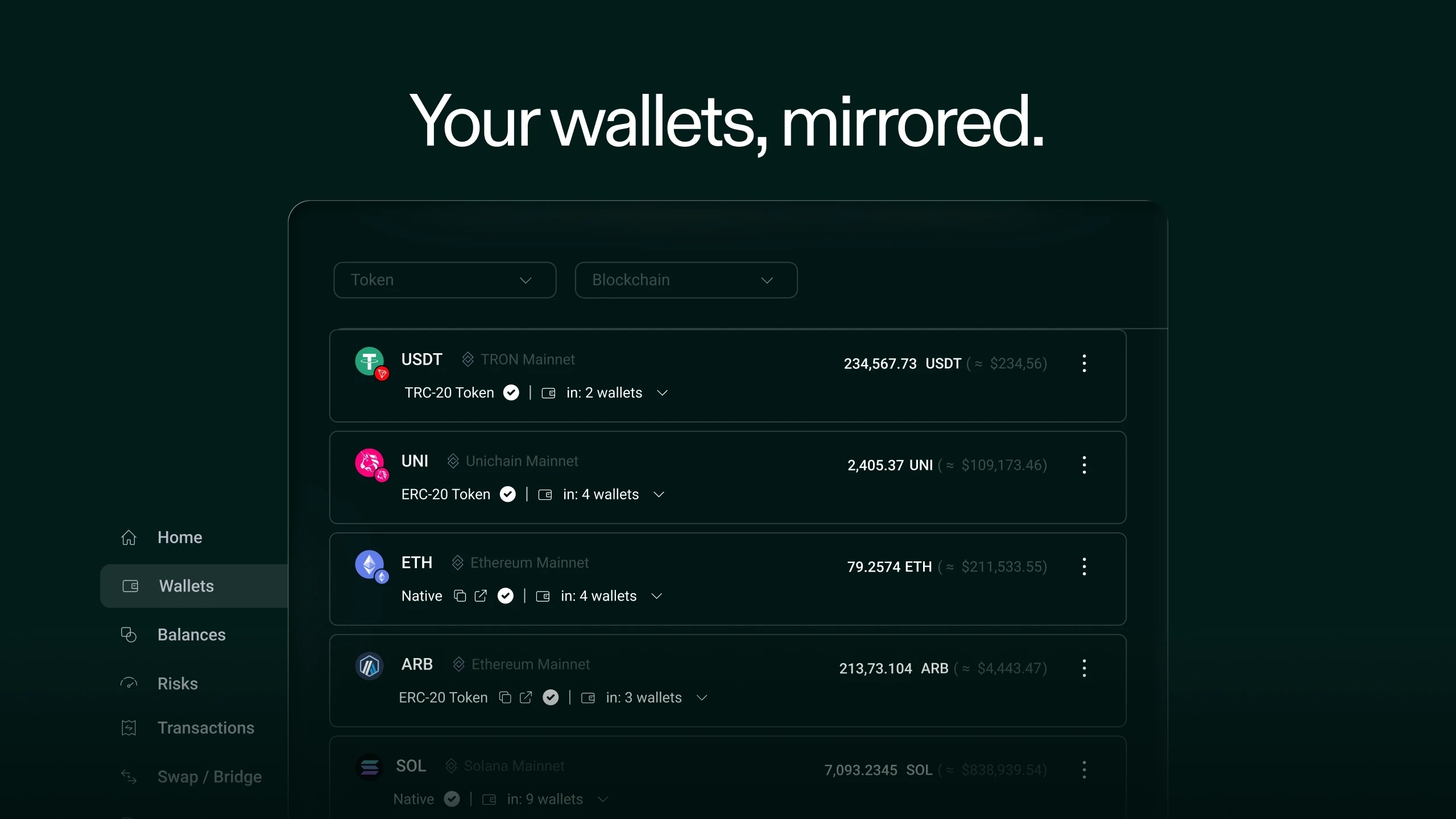
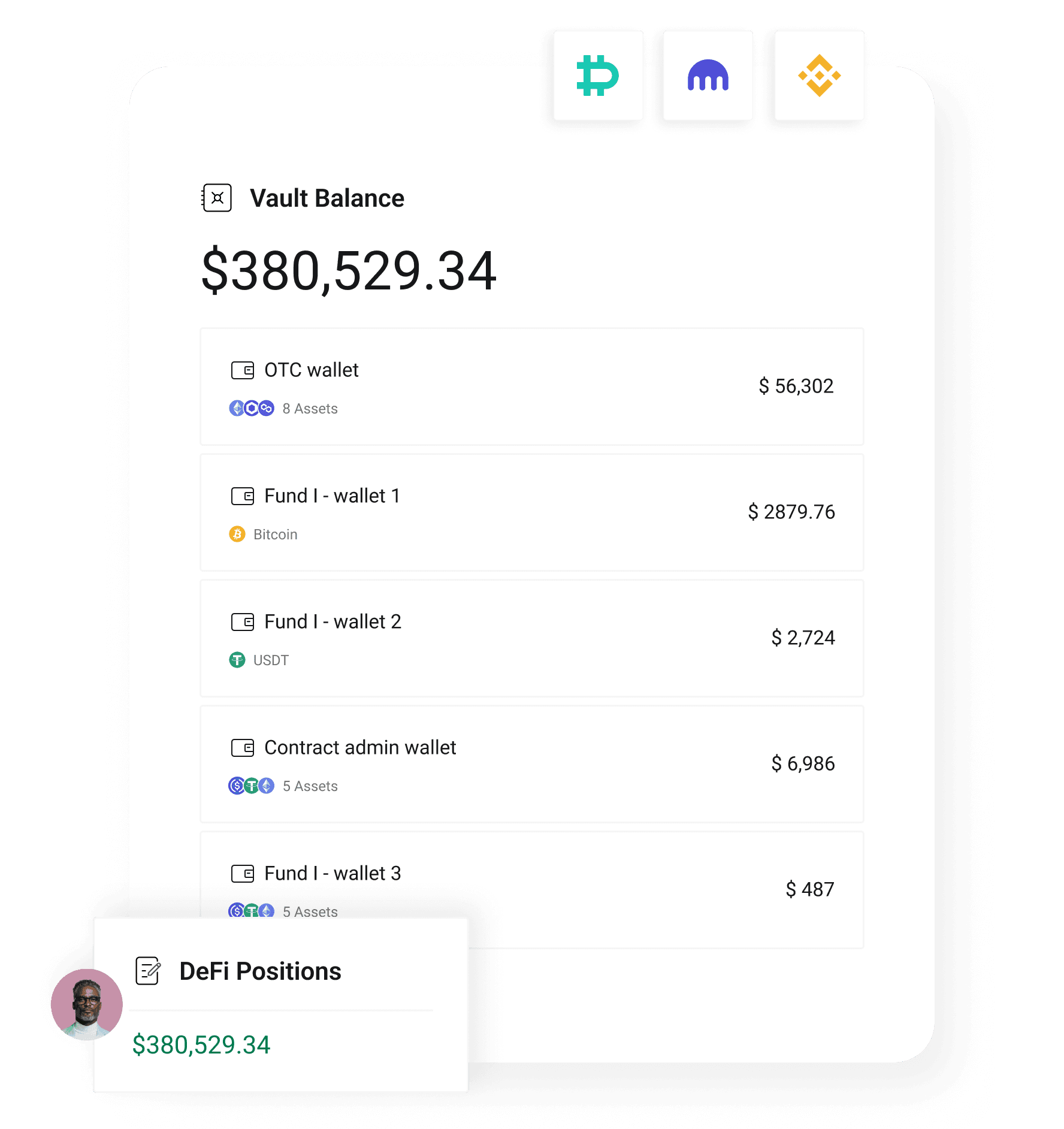
Yes. Your bank can run digital asset custody for its clients on enterprise-grade MPC wallets, where your bank holds the keys and defines the rules, with no single point of failure and no third party controlling client assets. You manage assets across blockchains, exchanges, and DeFi with real-time visibility, policy enforcement, and full audit trails. Utila is self-custody infrastructure, so your bank stays in control of the underlying keys at all times.
How does Utila integrate with our core banking systems and payment rails?
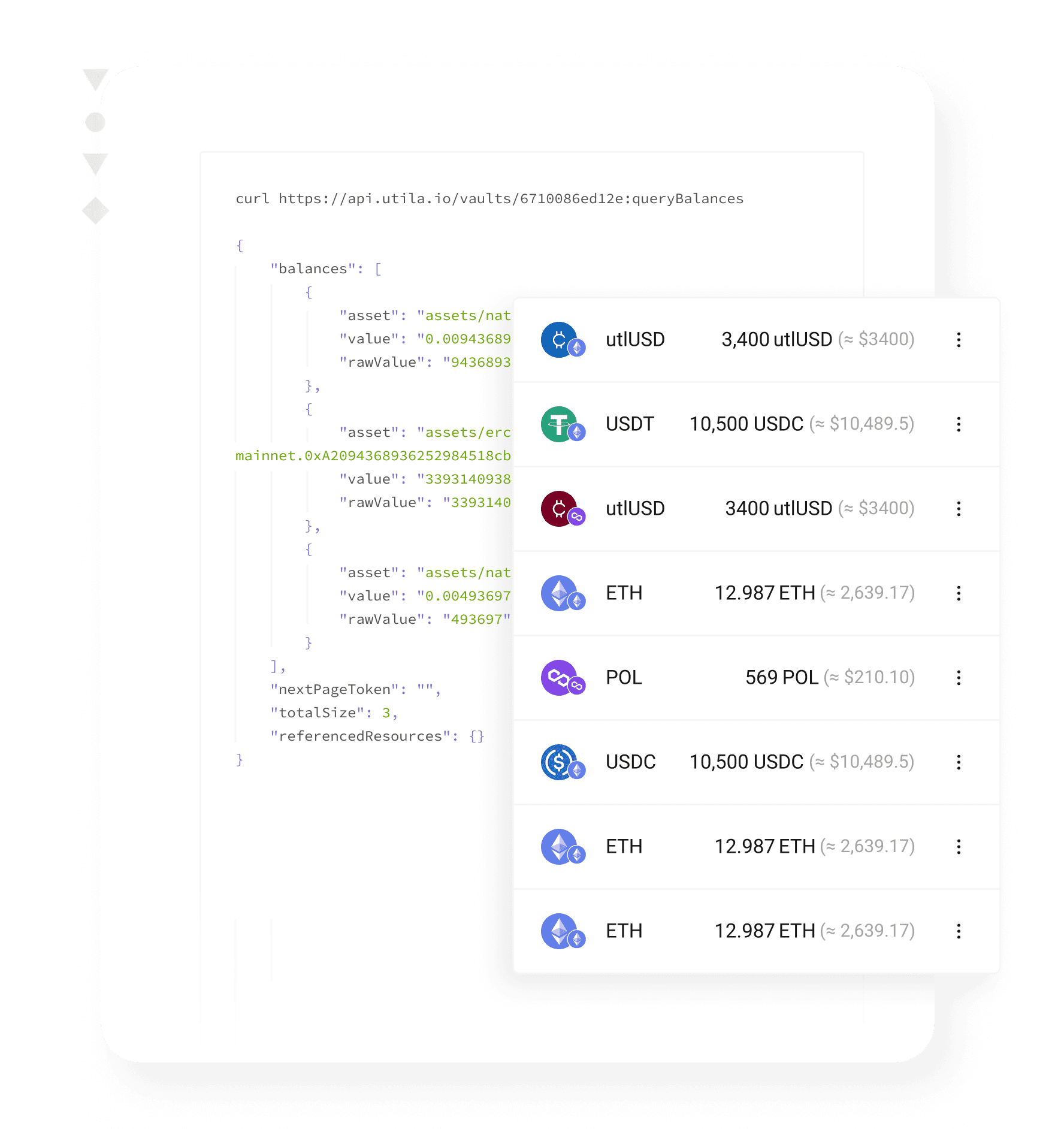
Utila uses an API-first architecture designed to connect with core banking systems, payment rails, and internal tooling. Your engineering teams can embed wallet creation, transfers, settlement, and reporting into existing bank systems through the API, without rebuilding those systems around digital assets. This keeps digital asset operations consistent with the infrastructure your bank already runs.
Can a bank run Utila across multiple regulated jurisdictions?
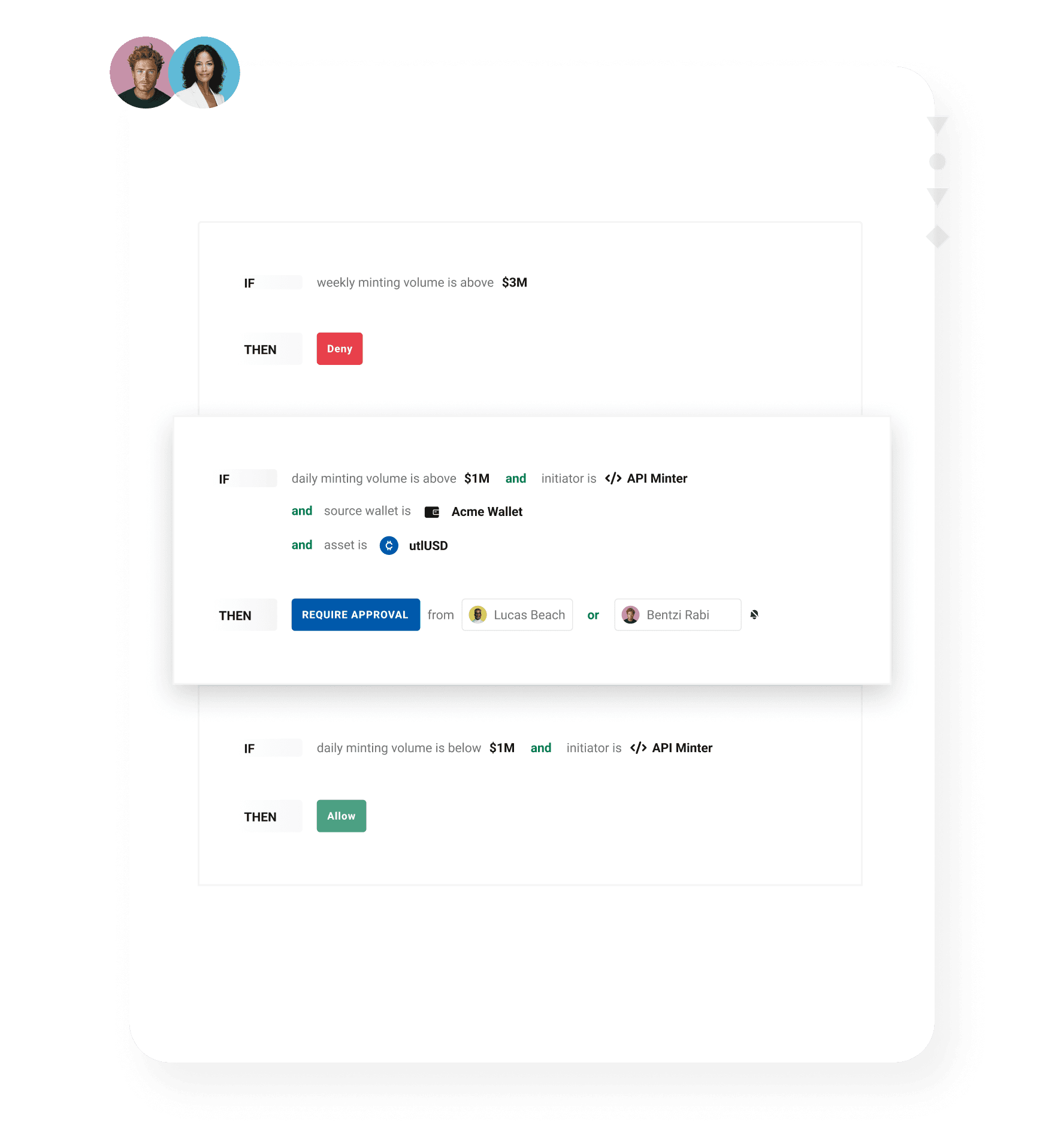
Yes. Utila processes tens of billions in monthly volume across multiple jurisdictions, with support for AML and KYT screening, travel rule enforcement, and audit-ready logs built into every workflow. Your bank can apply jurisdiction-specific policy controls, roles, limits, and approval quorums, so operations meet local requirements without separate systems per region.
How does a bank move from a digital asset pilot to production on Utila?
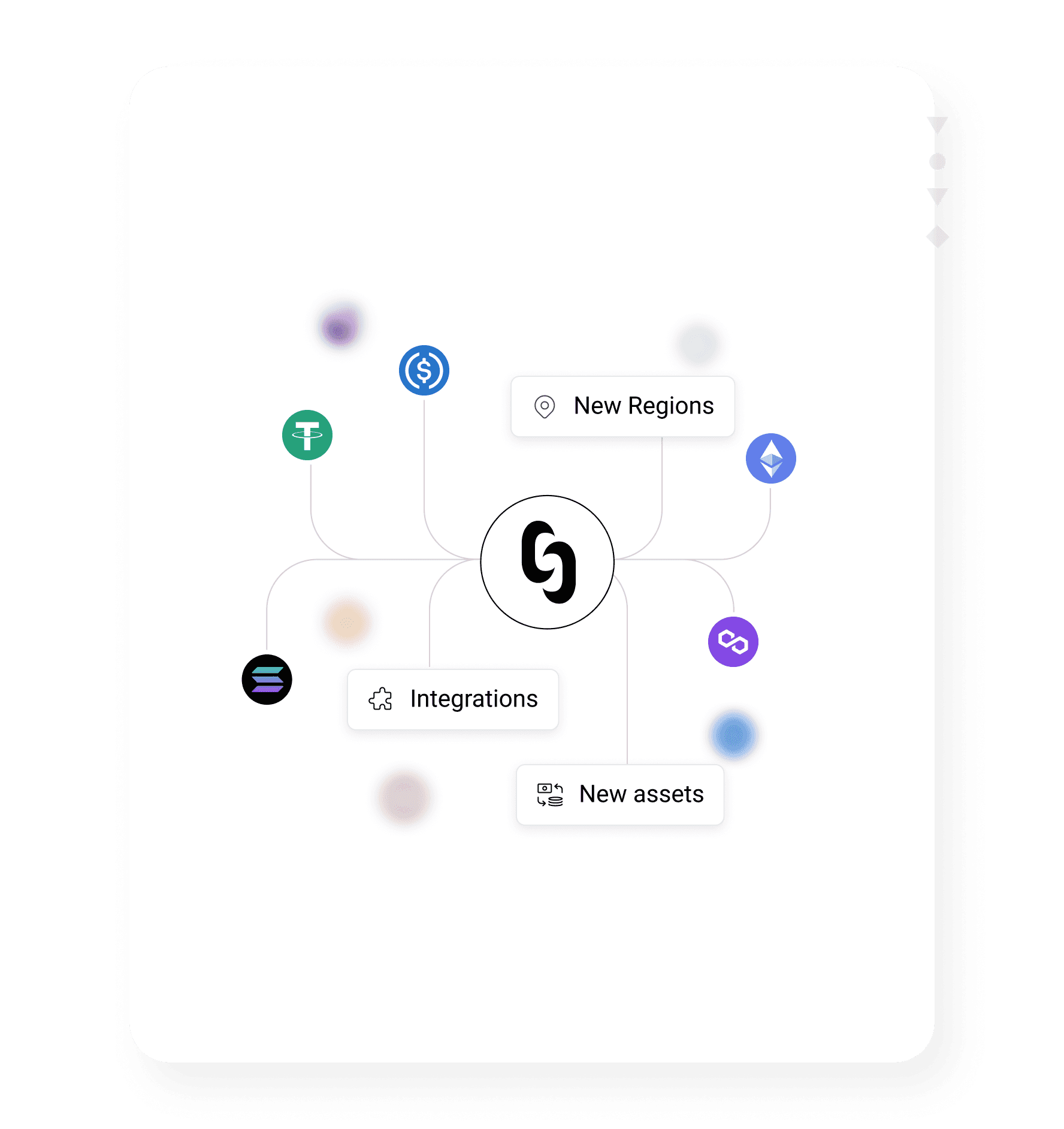
Your bank can scale from pilot to production on Utila without re-architecting its setup. The same MPC wallet infrastructure, policy engine, and compliance controls run from a small initial deployment through full production volume, so a pilot does not become technical debt later. You add users, wallets, policies, and integrations as the program grows.
What should a bank evaluate when comparing digital asset infrastructure providers?
Banks comparing digital asset infrastructure should weigh the key management model, compliance depth, jurisdictional coverage, and integration fit with core banking. Utila provides self-custody MPC wallets where the bank holds its own keys, SOC 2 Type II compliance, native AML and KYT screening, and an API-first design that connects to existing bank systems. Confirm whether a provider gives your bank direct control of keys and policies, rather than holding assets on your behalf.