Modular stablecoin payments infrastructure built for fintechs, PSPs, and banks
Build and scale stablecoin payments and operations on infrastructure you truly control - from wallets and compliance to liquidity access and routing. Move value globally, settle instantly, and automate high-volume flows without vendor lock-in or margin leakage.
Customer Support
Secured in TX Volume
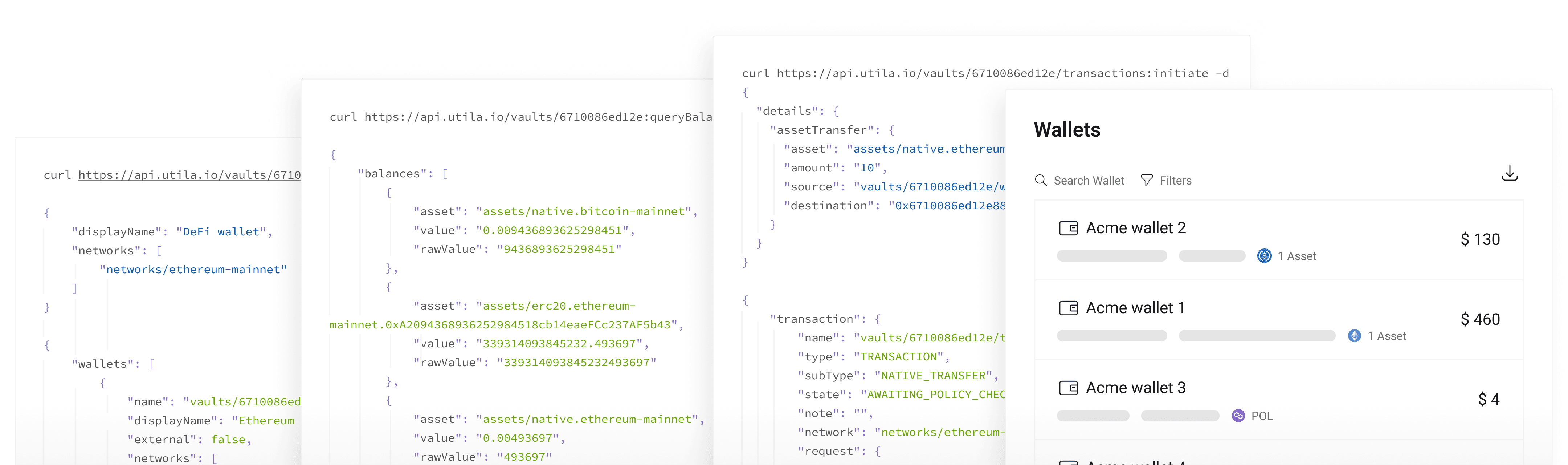
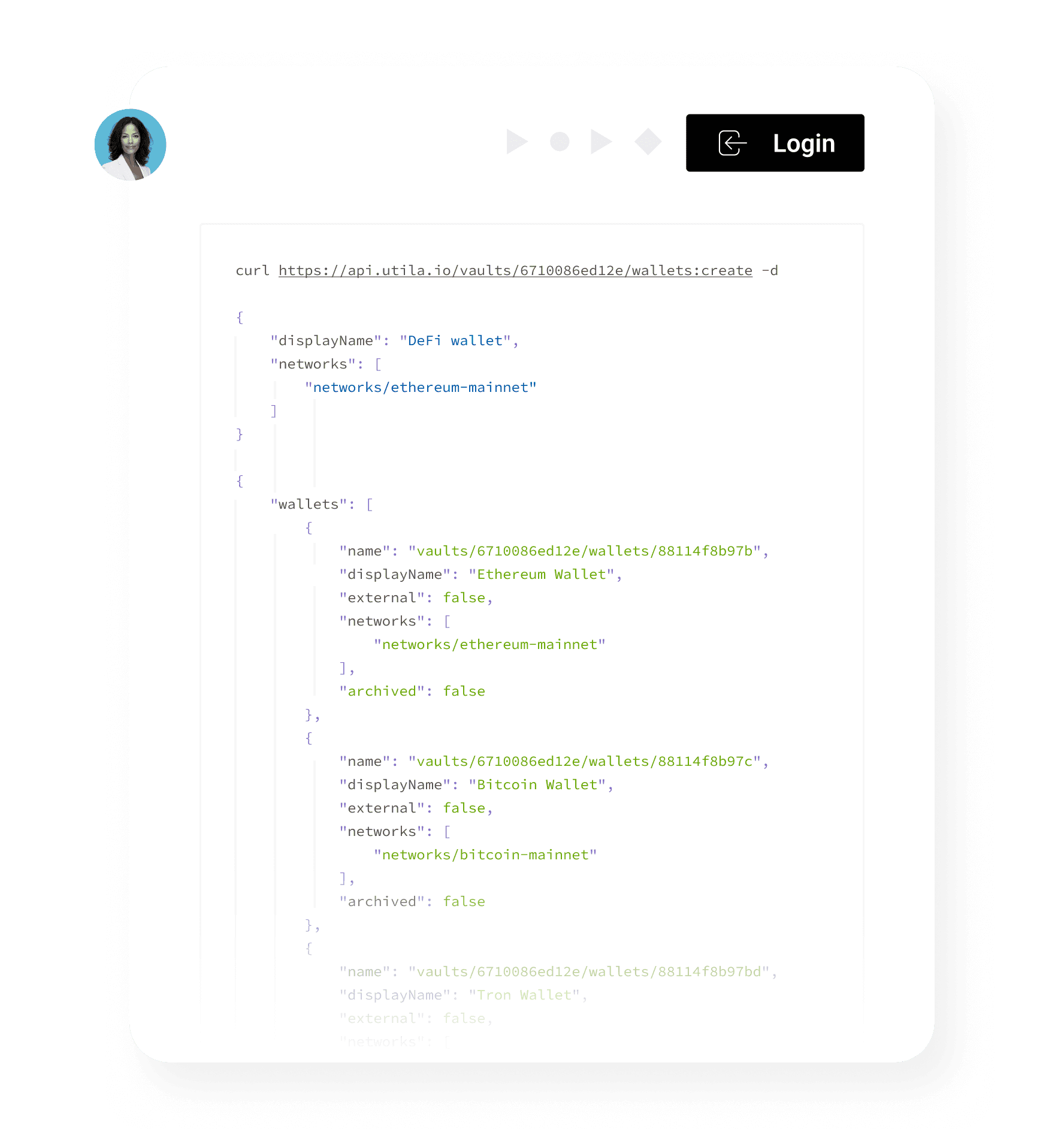
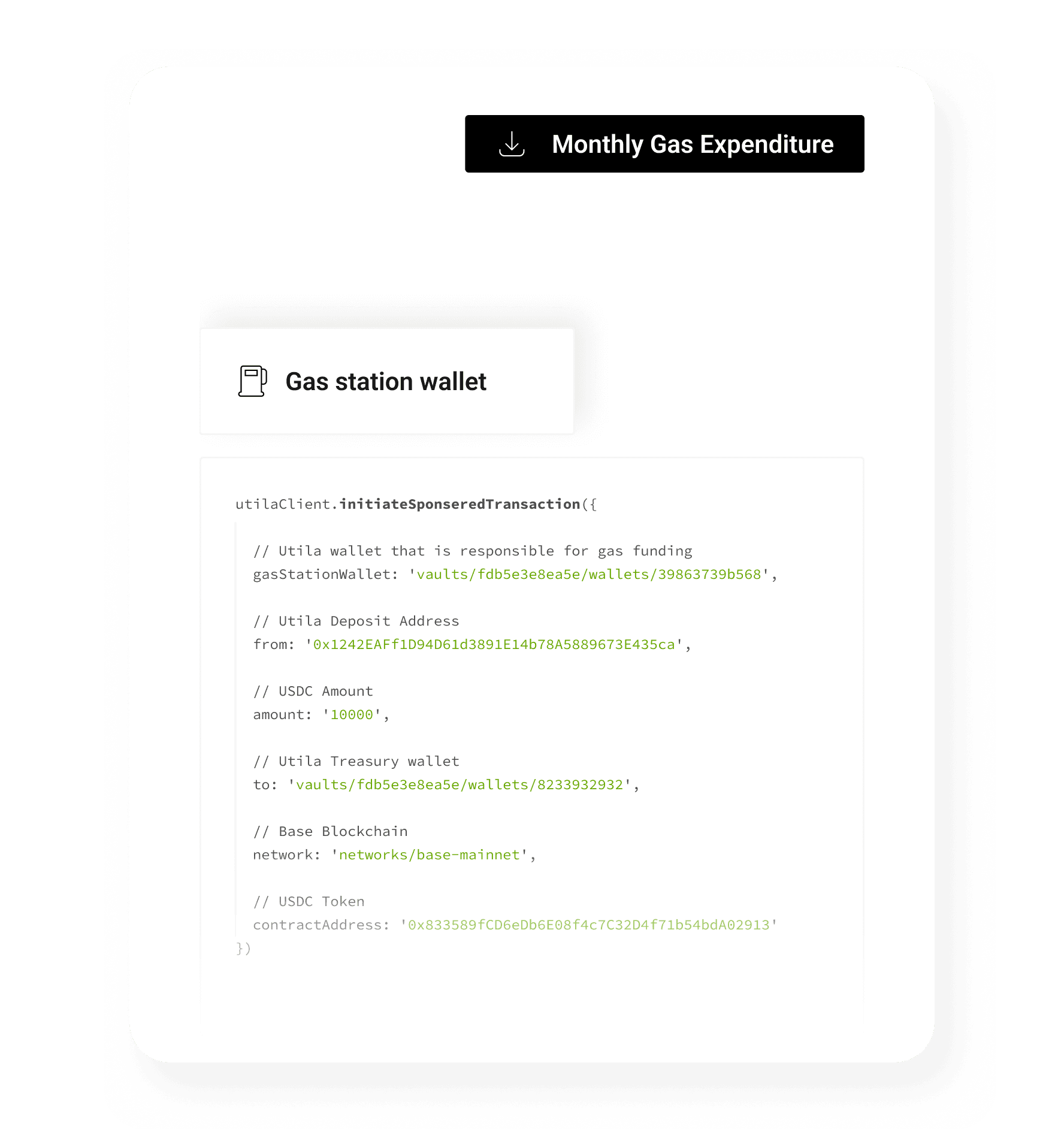
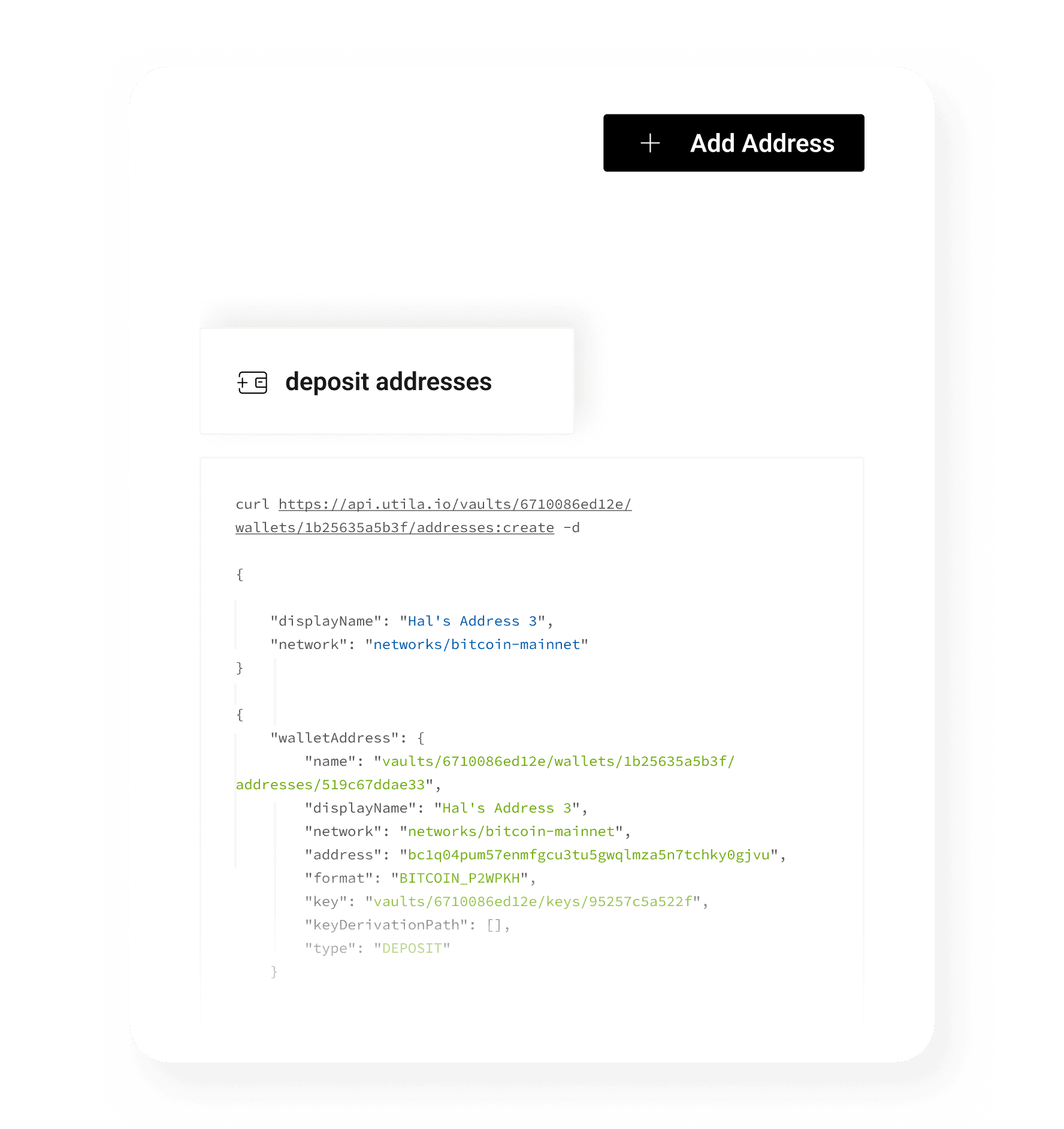
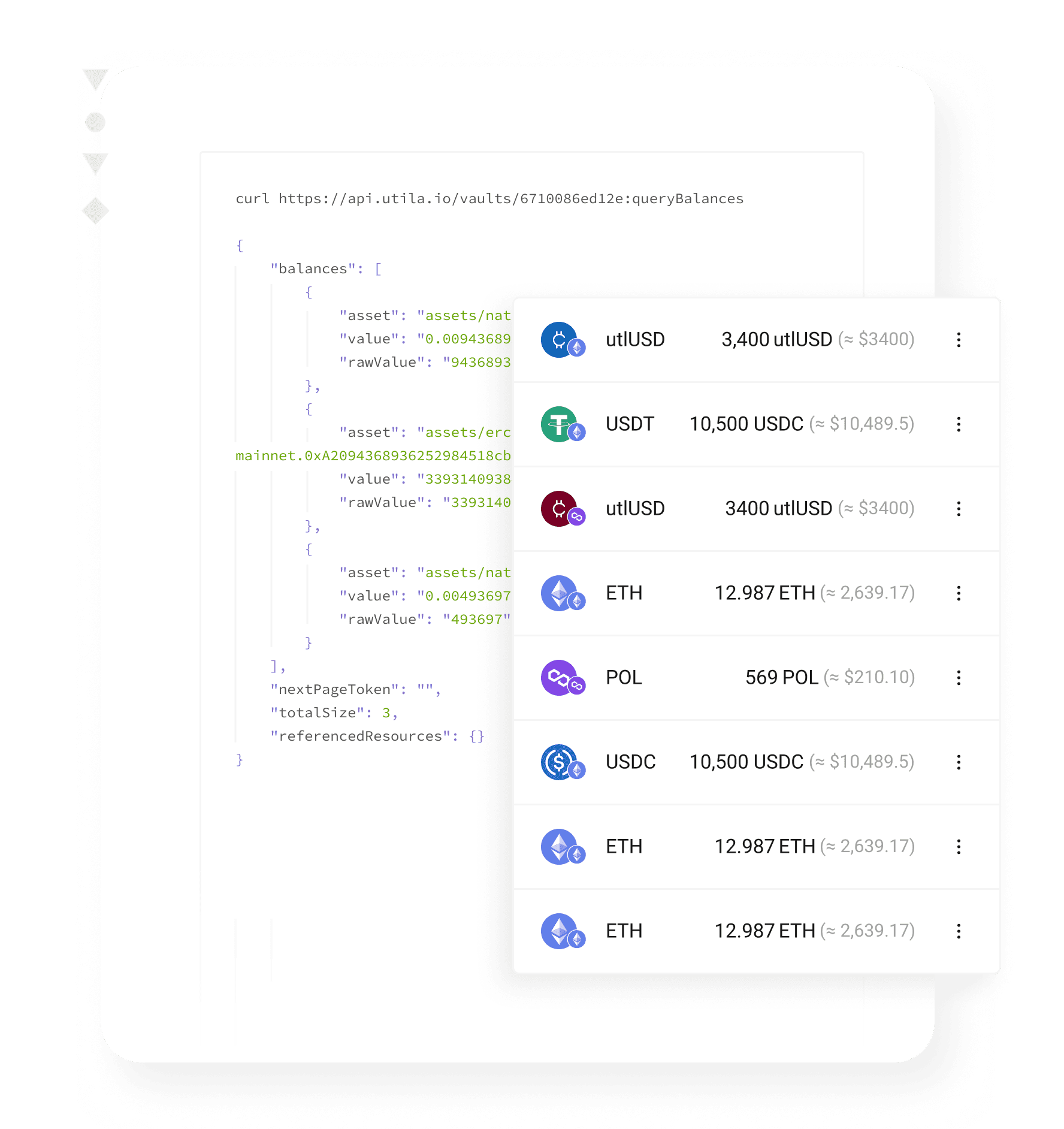
Tools for stablecoin payments that puts you in control
Integrations for end-to-end stablecoin workflows.
100+
blockchains
30+
integration partners
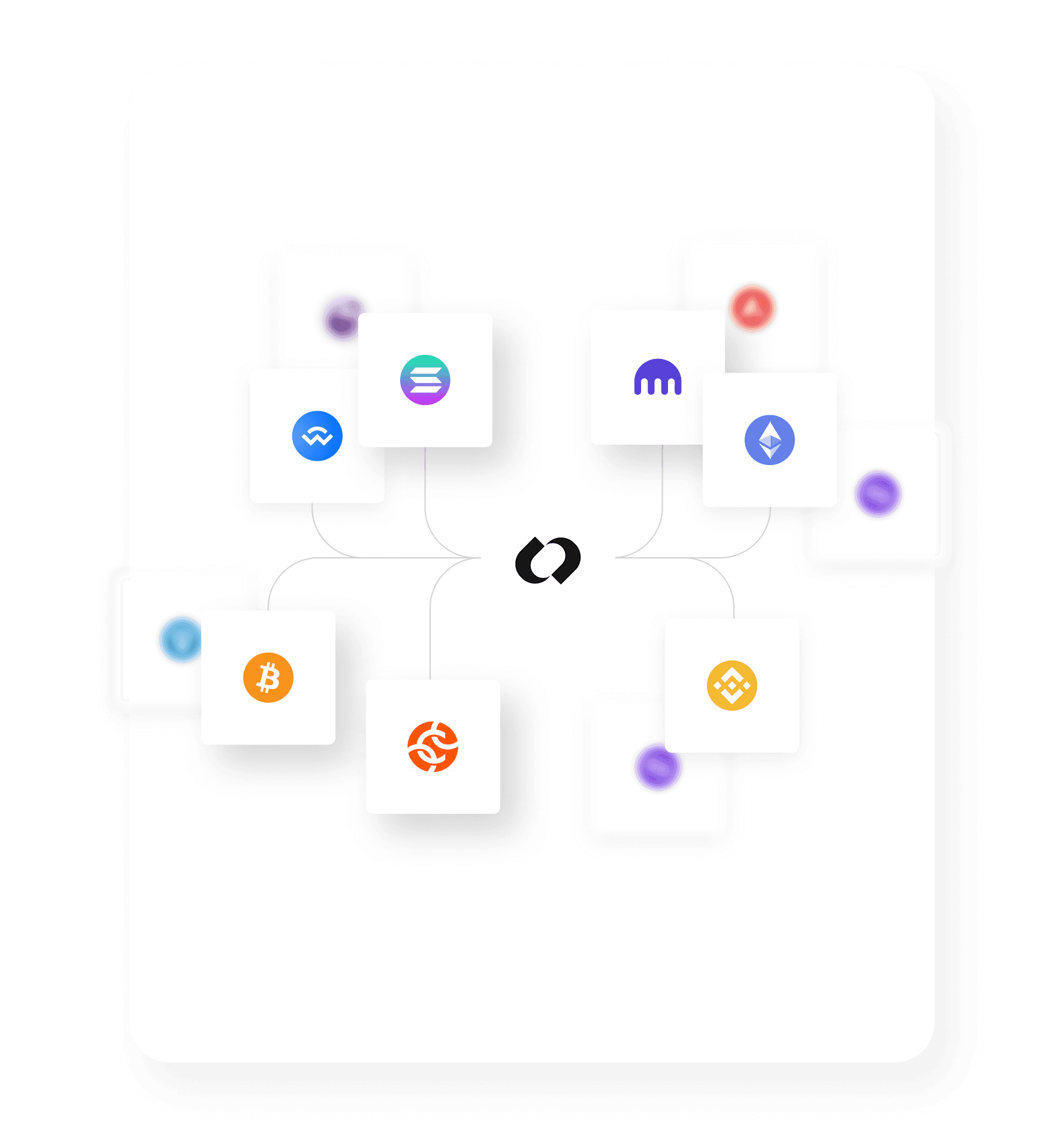
Seamless Connectivity
to exchanges, yield, and staking
Tap into a global partner network with Utila Link.
Discover
by region, chain, asset or vertical
Connect
to global payment rails
Settle
securely and at scale

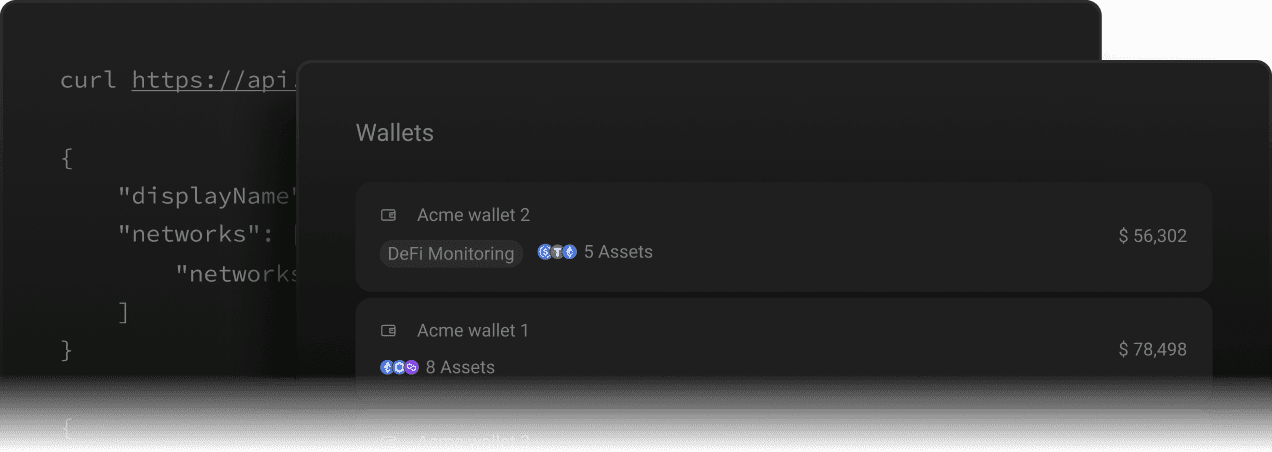
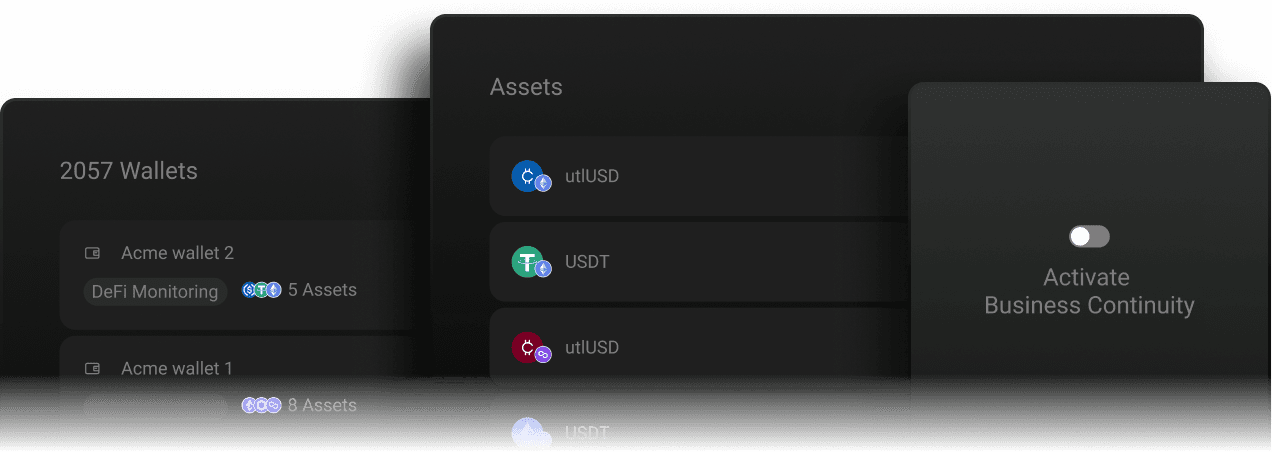
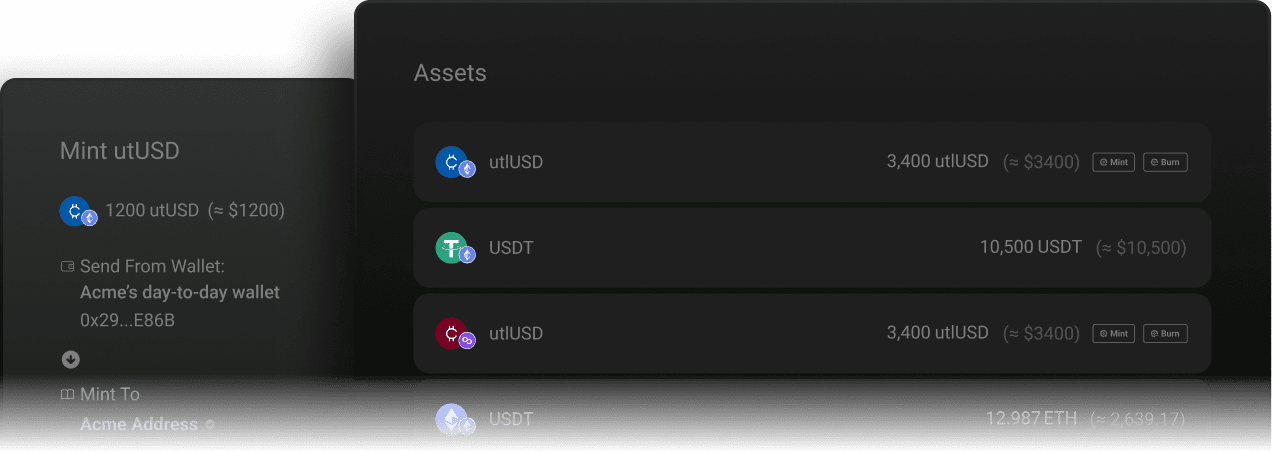
Comprehensive infrastructure stack for all digital asset operations
Why leading institutions are moving to Utila

How does Utila handle high volume stablecoin payouts and pay-ins?

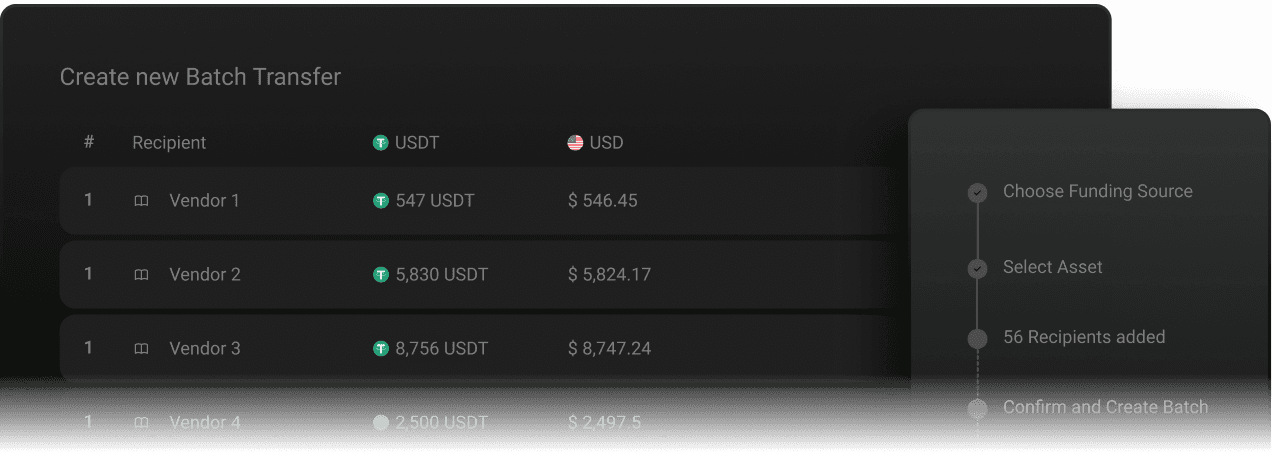
Utila handles high-volume payouts with batch transfers, programmable approvals, built-in gas abstraction, and embedded compliance across EVM and non-EVM chains. For pay-ins, it assigns dedicated wallets and deposit addresses per customer, corridor, or entity, then automates screening, payer attribution, and sweeping into central treasury. Both flows run under policy-driven governance covering roles, limits, and approval quorums.
Which stablecoins and blockchains does Utila support for payments?
Utila supports stablecoin payments across more than 100 blockchains, spanning EVM chains alongside non-EVM networks such as Tron and Solana, with stablecoins including USDC and USDT. Every chain runs through unified wallets, policies, and execution, so teams manage the whole footprint from one place. Institutions can add new chains and corridors as volumes grow, without re-platforming their infrastructure.
How does Utila support stablecoin payments on Tron and TRC-20?
Utila supports stablecoin payments on Tron, where TRC-20 USDT moves much of the world's stablecoin volume across LATAM, APAC, and other high-growth corridors. You run TRC-20 pay-ins and payouts through the same unified wallets, policies, and compliance screening as every other chain, with batch transfers and gas handling built in. Energy and bandwidth costs on Tron are managed for you, so teams settle TRC-20 flows at scale without holding native gas reserves on each wallet.
How does Utila secure stablecoin funds and payment operations?
Utila secures funds with enterprise-grade, non-custodial MPC wallets that remove the single points of failure and counterparty risk tied to held keys. Every workflow runs under policy-driven governance, including roles, spending limits, approvals, whitelists, and admin quorum protection. Transaction simulation previews outcomes and decoded payloads before execution, so teams catch costly errors first.
How does Utila handle AML and compliance for stablecoin payments?
Utila handles compliance by letting you connect your preferred AML and KYT providers and enforce automated screening rules directly inside transaction workflows. Screening runs on both pay-ins and payouts rather than as a separate manual step, with funds tracked by payer, entity, wallet, and flow. Because you choose and configure the compliance vendors, you keep policies you can adjust instead of accepting a provider's fixed rules.
How does Utila's cost structure work as payment volume scales?
As payment volume grows, Utila's model is built so you keep more of the margin, because you own the wallets, compliance, and routing rather than paying fees that climb as a single provider's stack scales with you. You choose counterparties per corridor, define routing rules, and tune spreads and execution paths as you scale. The infrastructure is SOC 2 Type II compliant, so larger volumes run on audited, enterprise-grade controls.
Why choose Utila over a bundled stablecoin payment provider?
Choosing Utila means owning your wallets, compliance, liquidity, and routing instead of renting them from a single provider that controls your keys and your costs. You get MPC key control with no single point of failure, multi-provider redundancy across corridors, direct access to counterparties, and a modular architecture that grows with you. What it removes is vendor lock-in and margin leakage, the structural limits of older stablecoin setups.
Can Utila convert stablecoins to fiat and settle into bank accounts?
Yes, Utila converts between fiat and stablecoins 24/7 and settles funds directly into bank accounts. It connects you to on/off-ramps, exchanges, OTC desks, and liquidity providers through Utila Link, the institutional network for discovering partners and settling across stablecoin rails. You choose the counterparties for each corridor instead of being tied to a single liquidity source.
How does Utila support reporting and reconciliation for payment operations?
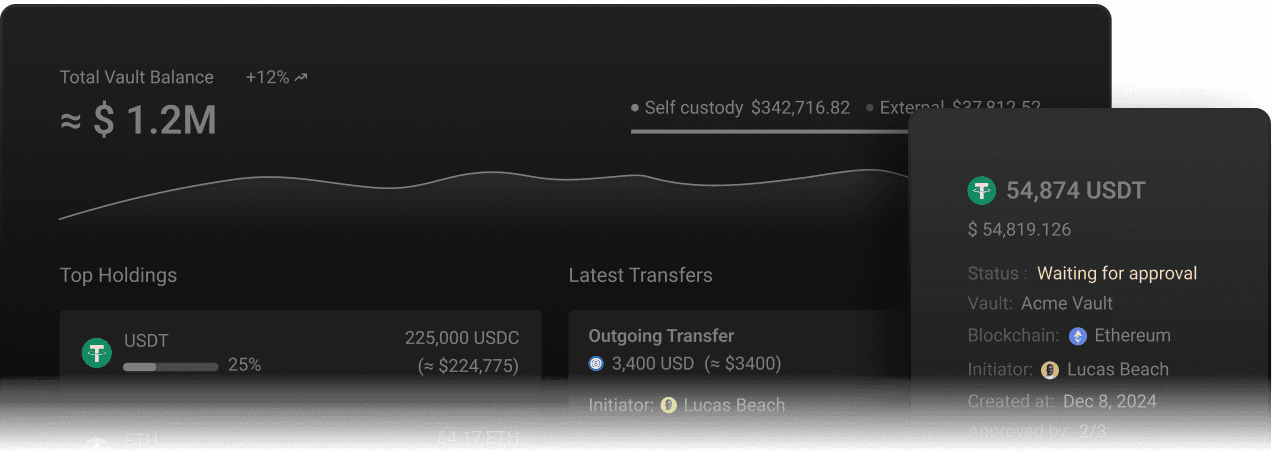
Utila tracks funds by payer, entity, wallet, and flow, then produces exportable reports for finance and audit teams. Reconciliation draws on payer attribution captured at pay-in and the audit-ready records generated across every transaction. Teams get unified visibility into balances and movements without stitching data together from separate tools.
How long does it take to get started on Utila?
Account setup takes minutes, and Utila's onboarding team works with you hands on to get your environment configured, tested, and ready to operate. For teams integrating via API, full REST API access and webhooks are available from day one. Most organizations are up and running significantly faster than with traditional infrastructure providers.
Ready to take control of your stablecoin stack?
Companies who trust our enterprise-grade governance, security, and operational control:
Seamlessly connect your existing systems, infrastructure, and workflows — all in one unified platform.